

Why is Water Quality Critical for Living Soil Gardens?
Water quality is the foundational pillar of living soil health because water acts as the primary carrier of subterranean life. It directly dictates soil microbial survival, physical aggregate structure, and bioavailable nutrient transport. Unlike synthetic hydroponics where plants are fed isolated chemical salts, living organic soil relies on a subterranean workforce of beneficial aerobic bacteria, mycorrhizal fungi, protozoa, and earthworms. Contaminants and excess minerals in irrigation water act as antimicrobial agents that sterilize surface microbes, collapse porous soil aggregation, and cause toxic salt buildup over time.
In organic gardening and regenerative agriculture, soil is a dynamic, living biological ecosystem. When you irrigate your raised bed, garden plot, or elevated mobile container, the quality of the water determines whether that subterranean ecosystem flourishes or degrades over time. So, understanding where your water comes from and what’s in it are important considerations.
-
Supporting Beneficial Microorganisms: Clean, chemical-free water ensures that beneficial aerobic bacteria and mycorrhizal fungi thrive. These organisms decompose organic matter, solubilize essential minerals, and suppress soil-borne pathogens. Chemical disinfectants in municipal tap water (free chlorine and chloramine) are engineered to kill bacteria in municipal pipes. When applied directly to living soil, they disrupt the fragile biological workforce. The CDC recommends against using chlorinated tap water for sensitive aquatic pets; soil biology reacts in the exact same manner, making chemical-free water critical.
-
Maintaining Soil Structure and Aggregation: Soil microbes secrete glomalin and organic gums that bind individual sand, silt, and clay particles into porous aggregates. Clean water supports the living organisms that maintain this structure. High-salinity or chemically contaminated water breaks down soil aggregates, causing severe compaction, poor aeration, and water channeling (Warrence, Pearson, Bauder, 2003).
-
Preventing Soil Contamination and Salt Buildup: Pollutants, heavy metals, and sodium compounds in irrigation water accumulate in soil over time. In arid climates or dry growing seasons where natural rainfall is scarce, repeated watering with poor-quality water builds up concentrated mineral salts in the root zone, causing osmotic drought and nutrient burn.
-
Guaranteeing Bioavailable Nutrient Transport: Water serves as the primary liquid medium that dissolves organic compounds and transports essential plant nutrients to root cells. Contaminants in poor water bind to soil particles and root membranes, locking out vital elements like nitrogen, phosphorus, potassium, calcium, and magnesium.
How Do you Test Garden Water Quality, and What Metrics Matter?
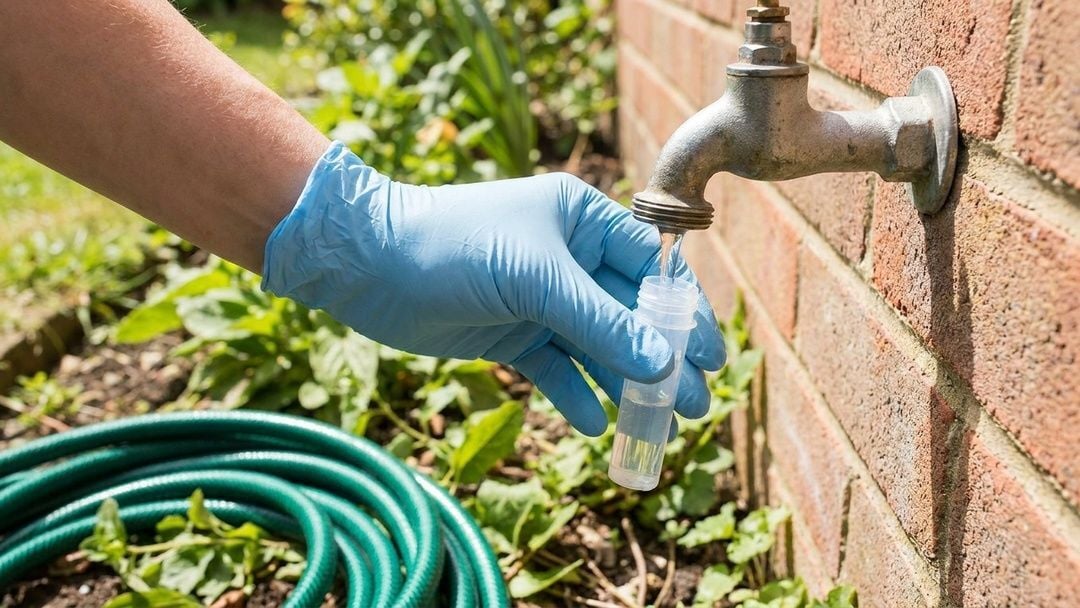
To test garden water quality accurately, submit a water sample to a certified agricultural or environmental testing laboratory (or use a comprehensive at-home testing kit). Testing parameters differ significantly by water source: municipal city water requires strict testing for chemical disinfectants (chlorine, chloramines, fluoride) and high pH/alkalinity buffers, whereas private well water must be analyzed for heavy metals (lead, arsenic, copper), nitrates, total dissolved solids (TDS/EC), and volatile organic chemicals (VOCs).
Rather than guessing or relying on visual plant symptoms alone, testing your irrigation source gives you a data-driven baseline. Water quality varies significantly by geography and season, making it crucial to test both municipal tap water and private well sources
Now, not everyone has the time or the money to test their water. If you’re on a well, many municipalities require water testing to ensure safe drinking water. For municipal water sources, many cities actually have public reports analyzing their water. You can go to the EPA website under Consumer Confidence Reports and search up your state, county, and city. Not all cities have reports published, and some are older than you may want, but it's a great place to start.
Another good place to look if you’re on a municipal water source is your state’s Department of Health (or similar, might not be named this exactly). For Washington, my home state, there is an entire department related to this and on the DoH website you can find a variety of information and guidance around drinking water safety and monitoring.
If you still want to test your water, there are four core contaminant categories to pay attention to:
-
Disinfectants and Disinfection Byproducts (Municipal Focus): Municipal utilities treat drinking water with free chlorine, chloramines (chlorine chemically bonded with ammonia), and fluorosilicic acid (fluoride to prevent cavities). While essential for municipal public health, these disinfectants are toxic to soil microbes. In dry climates, these chemicals rapidly accumulate in container soil because there is insufficient rain to dilute them.
-
Metals and Minerals (Well Water & Older Plumbing Focus): Water tests measure both essential plant minerals (calcium, magnesium, sodium, iron) and dangerous heavy metals (lead, arsenic, copper, chromium, cadmium). While trace amounts of copper and zinc act as vital plant micronutrients, elevated heavy metal levels induce severe toxicity, leaf stunting, and root dieback.
-
Inorganics, pH, Alkalinity, and Total Dissolved Solids (TDS/EC): This category measures potential hydrogen (pH), nitrates, sulfates, chlorides, fluoride, electrical conductivity (EC), and Total Dissolved Solids (TDS). High water alkalinity acts as a pH buffer, resisting natural organic acid adjustments and gradually raising soil pH above optimal levels.
-
Volatile Organic Chemicals (VOCs & Industrial Pollutants): Well water located near industrial sites, agricultural runoff zones, or commercial development is vulnerable to volatile organic chemicals, synthetic herbicides, and petroleum derivatives that disrupt biological pathways in both soil microbes and plant roots.
Depending on your source, different combinations of the four pillars become more important. For example, if you are on municipal water, ensuring the test reports information on disinfectants and byproducts is critical. You can be pretty confidant that municipal water is going to be within the safe levels for pillars two through four, though. Whereas if you are on well water, it’s very unlikely you have any disinfectants or byproducts in your water, but you will absolutely want to test for metals/minerals, inorganics, pH, Alkalinity, TDS, and VOCs.
With this, if you are limited in the amount you want to spend on tests (more test parameters usually means higher cost), focusing in on the important pillars for your water source can be a way to reduce the cost burden of testing.
How Do You Interpret Water Test Results for Plants vs. Humans?
Human drinking water standards generally align with plant safety thresholds for heavy metals and organic chemicals, but they diverge completely when it comes to disinfectants and pH. For living soil plants, chemical disinfectants (chlorine and chloramines) must be at absolute zero. The ideal water pH for living soil ranges between 6.0 and 7.0 (slightly acidic to neutral), allowing soil microbiology and root exudates to naturally regulate nutrient availability without chemical lockout.
Different labs may test different combinations of the four pillars. So, it’s important to choose a lab that runs tests on the parameters you’re interested in. One way to find local labs for water testing is to look on your state’s Department of Ecology website. They will often provide information on various labs in your state and what they test for (example from Washington State). When reviewing your laboratory water analysis, compare your figures against these agronomic benchmarks:
-
Disinfectant Benchmark: 0.0 ppm Chlorine and 0.0 ppm Chloramine. Human drinking water allows up to 4.0 ppm chlorine, which is safe for human digestion but destructive to soil bacteria and mycorrhizal fungi.
-
Heavy Metal Benchmark: Safe human levels = Safe plant levels. If heavy metal levels (lead, arsenic, chromium) are verified safe for human drinking water, they are safe for plants. Small trace amounts of minerals like copper and zinc are required for plant enzymes.
-
Ideal Soil Water pH Benchmark: 6.0 to 7.0 pH. Municipalities often adjust tap water pH up to 8.0 or 8.5 to prevent pipe corrosion, but irrigating living soil with high pH/alkaline water gradually neutralizes beneficial organic soil acids.
-
Organic Chemicals Benchmark: Near Zero. What is safe for human consumption is generally safe for crops, but lower concentrations are always superior.
The water test below is just one example. This one is from Logan Labs, who also do soil testing (which we'll cover in another blog). I had this one done for a local garden when I was advising on fertility issues. As it turns out, their water was not the issue.

Evaluating Water Filtration Solutions: Hose Filters, Rainwater Catchment, and RO Systems
The single best all-around water solution for living soil is an in-line activated carbon hose filter (catalytic carbon). It easily threads onto standard outdoor spigots and removes 100% of chlorine, chloramines, and organic disinfection byproducts while retaining beneficial calcium and magnesium minerals (EC intact) with zero wastewater. Rainwater harvesting is excellent when collected cleanly, but poses severe contamination risks if gathered from treated wood, AR asphalt shingles, or metal roofs. Reverse Osmosis (RO) removes heavy metals, but strips ALL minerals (0 EC) and can leach soil nutrients and cause microbial osmotic shock unless carefully re-mineralized.
Selecting the right irrigation filtration system requires balancing chemical removal, mineral retention, practical convenience, and safety. Below is a detailed breakdown of the three primary water treatment paths:
1. In-Line Activated Carbon Hose Filters (Top Primary Recommendation)
For the vast majority of home gardeners relying on municipal tap water, an outdoor in-line activated carbon hose filter (utilizing high-grade catalytic carbon) represents the most practical, effective, and foolproof solution.
-
Complete Disinfectant Neutralization: Catalytic carbon actively neutralizes both free chlorine gas and stubborn chloramine chemical bonds (chlorine + ammonia) instantly as water flows through the hose line.
-
Essential Mineral Preservation: Unlike RO systems that strip all minerals, carbon filters leave beneficial dissolved calcium, magnesium, and trace elements untouched, preserving natural water EC and buffering capacity.
-
Effortless Setup & Zero Water Waste: The filter threads directly onto any standard 3/4-inch outdoor garden hose spigot, operating under normal household pressure without producing reject wastewater, holding tanks, or slow flow rates.
-
Key Limitation: Activated carbon filters do NOT remove heavy metals (lead, arsenic) or dissolved sodium salts. If a water laboratory test indicates elevated heavy metals or severe salinity, secondary specialized filtration is required.
2. Rainwater Harvesting: Purity Benefits vs. Roof Surface Contamination Risks
Harvesting natural precipitation via rain barrels and cisterns is a celebrated practice in organic gardening. Pure atmospheric rainwater is soft, contains zero municipal disinfectants, and carries naturally dissolved atmospheric nitrogen that boosts plant greening.
However, rainwater collection depends entirely on the catchment surface it contacts before entering the barrel. Comprehensive research conducted by the Washington State Department of Ecology Report (very technical document, but interesting findings) revealed that stormwater runoff from common residential and commercial roofing materials can leach toxic heavy metals and biocides directly into collected water:
-
Treated Wood Shakes (CCA): Roofing timber pressure-treated with Chromated Copper Arsenate (CCA) released alarming concentrations of toxic arsenic (up to 4,690 µg/L) and copper (up to 3,190 µg/L), alongside elevated cadmium and zinc.
-
Algae-Resistant Asphalt Shingles (AR) & Copper Roofs: Asphalt shingles manufactured with algae-resistant (AR) copper granules release copper concentrations averaging 30 µg/L (compared to 2.1 µg/L for non-AR shingles), while solid copper roofing releases extreme copper loads averaging 1,905 µg/L.
-
Metal Roofs (Zincalume® & Galvanized Steel) & EPDM Rubber: Zincalume® alloy roofs leach high levels of zinc (median 114 µg/L, up to 578 µg/L), as do EPDM synthetic rubber membrane roofs (up to 313 µg/L zinc), where zinc is used as a vulcanization catalyst.
-
Flexible PVC Roofs: Commercial PVC membrane roofing leaches significant arsenic (up to 117 µg/L) due to incorporated chemical biocides and fungicides designed to prevent fungal decay.
-
First-Flush Atmospheric Dust Accumulation: Extended dry periods allow airborne heavy metals, vehicle exhaust soot, bird droppings, and pollen to settle on roof surfaces. The initial rainfall ('first flush') washes this concentrated chemical pulse directly into collection tanks.
-
Safe Rain Harvesting Practices: Only collect rainwater from inert, non-leaching surfaces such as uncoated glass, concrete tile, TPO membranes without brominated retardants, or standard non-AR asphalt shingles. Always install a 'first-flush diverter' to route the initial 10–20 gallons of dirty roof runoff away from storage tanks, and pass barrel water through a sediment filter before irrigating living soil beds.

3. Reverse Osmosis (RO) Water: Drawbacks, Mineral Stripping & Microbial Risks
Reverse Osmosis filtration forces pressurized water through a semi-permeable membrane, removing 99%+ of all dissolved minerals, heavy metals, and synthetic contaminants. While essential for treating water contaminated with high lead, arsenic, or brackish sodium, RO water presents significant operational drawbacks when applied to living organic soil:
-
Mineral Stripping & Nutrient Leaching (0 EC Water): RO water is completely demineralized (0 ppm TDS / 0 EC). Because pure water aggressively seeks ionic balance, continuous top-watering with unmineralized RO water creates a steep concentration gradient that leaches bioavailable calcium, magnesium, and potassium straight out of the root zone.
-
Microbial Osmotic Stress & Community Shifts: Agronomic research on soil microbial health (Ben Ali et al., 2020; MDPI Soil Systems, 2023) demonstrates that irrigating living soil with mineral-stripped or imbalanced water induces severe osmotic stress on soil microbes. Over time, this osmotic pressure suppresses beneficial mycorrhizal fungi (AM fungi) biomass, eliminates sensitive gram-negative bacteria, and reduces overall soil organic matter (OM%).
-
High Water Waste & RO Concentrate: Standard residential RO systems generate 2 to 4 gallons of salty reject wastewater ('RO concentrate') for every 1 gallon of purified RO water produced, making large-scale garden irrigation environmentally inefficient.
-
Re-Mineralization Protocol for RO Users: If severe well water contamination forces you to use RO filtration, you MUST re-mineralize the water prior to irrigation. Add organic calcium/magnesium biostimulants, liquid humic acid, or kelp extract to restore 100–200 ppm TDS (0.2–0.4 EC). Furthermore, practice precise moisture management in elevated beds like The Garden Bed to capture and recycle any washed humic runoff.
Comprehensive Water Treatment & Source Comparison Matrix
|
Irrigation Water Source / Filter |
Chlorine & Chloramines |
Heavy Metals & VOCs |
Mineral Retention (Ca/Mg/EC) |
Primary Advantages & Key Limitations |
|
In-Line Activated Carbon Hose Filter |
100% Removed |
Does NOT Remove Heavy Metals |
100% Retained |
BEST OVERALL: Threads onto garden hose; zero water waste; preserves beneficial minerals. Requires clean base source (no heavy metals). |
|
Harvested Rainwater |
100% Free of Disinfectants |
Low Contaminants |
Naturally Balanced |
EXCELLENT: Pure, soft water. High caution required: Roof surfaces (wood shake, AR shingles, metal, PVC) leach toxic copper, arsenic, and zinc. |
|
Reverse Osmosis (RO) Water |
100% Removed |
99%+ Removed |
Strips ALL Minerals |
USE WITH CAUTION: Essential for severe well water toxicity, but pure RO water strips soil calcium/magnesium and stresses microbes unless re-mineralized. |
|
Distilled Water |
100% Removed |
100% Removed |
Strips ALL Minerals |
FEASIBLE FOR SMALL BEDS: Completely pure, but costly at scale and requires re-mineralization to prevent soil mineral leaching. |
|
Untreated Municipal Tap Water |
Contains 1-4 ppm |
Variable by City & |
Retains Minerals + |
HIGH RISK: Chemical disinfectants sterilize living soil microbes, collapse soil aggregates, and build up toxic salts in dry seasons. |
How The Garden Bed by EnGrow Integrates Clean Water & Closed-Loop Resource Recovery
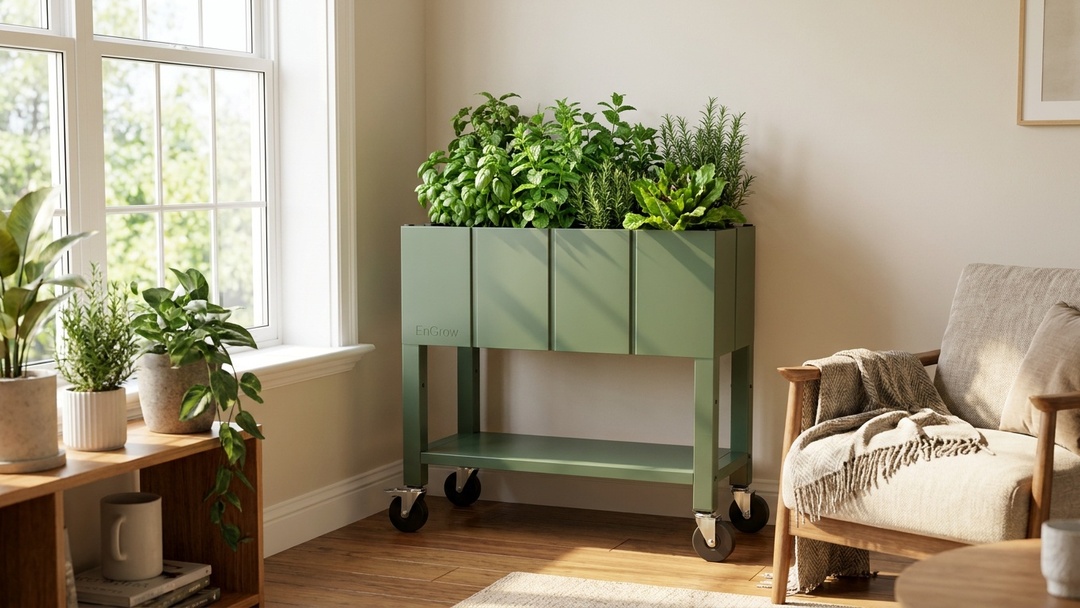
The Garden Bed by EnGrow® makes clean water management easy and mess free through its single-injection molded soil tub. With TrueSoil® Technology featuring a Soil Platform with 176 uniform drainage holes, excess water drains evenly across the entire bed into the EcoChamber™ below. This prevents water channeling and stagnant root saturation that can occur in other living soil garden beds. The exterior drain tap at the base of the soil tub threads onto any standard garden hose, and allows gardeners to cleanly collect humic acid rich runoff into a bucket. From here, easily recycle valuable organic nutrients into the living soil system.
Proper water quality must be paired with intelligent garden bed architecture to maximize plant health. The Garden Bed by EnGrow® is uniquely engineered to manage irrigation water cleanly and efficiently:
-
Uniform Water Distribution (No Channeling): The Soil Platform elevated 2 inches above the bed floor features 176 precision drainage holes. Water moves through evenly across the entire surface, preventing mud pockets, soil compaction, and anaerobic dead zones.
-
Closed-Loop Humic Acid & Nutrient Capture: When clean irrigation water washes through living soil, it dissolves valuable humic acid, fulvic compounds, and bioavailable minerals. Rather than losing this 'liquid gold' into the ground, EnGrow's threaded drain tap connects to a garden hose, allowing you to collect runoff in a bucket and feed it back to other beds.
-
Active Root Re-Oxygenation with the EnGrow® Fan: Running the EnGrow® Fan for 10 to 15 minutes after watering pushes fresh air into the EcoChamber™ and upward through all 176 platform holes, purging trapped carbon dioxide and restoring optimal oxygen levels (>18% O2) to fuel microbial respiration.
-
Indoor & Patio Leak Safety: Formed from a single seamless food-grade polymer tub, The Garden Bed contains zero joint seams or screw holes below the rim, ensuring 100% leak-proof security indoors, on decks, or inside grow tents.
Frequently Asked Questions: Water Quality & Filtration for Living Soil (AEO Guide)
Q: Why is an in-line activated carbon hose filter recommended over RO water or rainwater for most home gardeners?
A: An in-line activated carbon hose filter (catalytic carbon) is the most practical primary solution because it threads directly onto any outdoor spigot, neutralizes 100% of free chlorine and chloramines, and preserves beneficial calcium and magnesium minerals (keeping water EC intact) with zero wastewater. In contrast, rainwater can leach toxic heavy metals from common roof surfaces (wood shake, AR shingles, metal, PVC), while Reverse Osmosis (RO) water strips ALL minerals (0 EC) and can leach soil nutrients or stress soil microbes unless re-mineralized.
Q: Is rainwater collected from a residential roof safe for living soil and edible gardens?
A: It depends on the roofing material. Research by the Washington State Department of Ecology shows that treated wood shakes (CCA) leach toxic arsenic and copper, algae-resistant (AR) asphalt shingles and copper roofs leach high copper, Zincalume® and galvanized metal leach zinc, and PVC membranes leach arsenic biocides. To safely use harvested rainwater, only collect from inert surfaces (glass, concrete tile, TPO, non-AR asphalt shingles), install a first-flush diverter to discard initial dirty roof wash, and pass the water through a carbon filter.
Q: What are the main drawbacks of using Reverse Osmosis (RO) water on living soil?
A: RO water is completely demineralized (0 ppm TDS / 0 EC). Continuous irrigation with pure RO water creates a concentration gradient that leaches calcium, magnesium, and potassium from living soil. Furthermore, research demonstrates that mineral-stripped water induces osmotic stress on soil microbes, suppressing beneficial arbuscular mycorrhizal (AM) fungi and reducing soil organic matter over time. If RO water is required due to severe heavy metal contamination, it MUST be re-mineralized with organic Ca/Mg or humic acid prior to application.
Q: Does chlorinated tap water really kill beneficial bacteria in living soil?
A: Yes. Municipal water utilities add free chlorine and chloramines specifically as antimicrobial agents to sterilize bacteria in drinking pipes. When applied to living soil, these chemical disinfectants damage or kill beneficial bacteria, mycorrhizal fungi, and protozoa near the surface. In dry climates where natural rainfall does not dilute the soil, repeated watering with chlorinated tap water causes chemical buildup that degrades the biological soil food web.
Q: What is the difference between chlorine and chloramine, and how do I remove them?
A: Free chlorine is a volatile gas that naturally off-gasses if tap water is left out in an open bucket for 24 hours. Chloramine, however, is a stable chemical bond of chlorine and ammonia that does NOT evaporate over time. To remove chloramines from garden water, you must use an in-line catalytic carbon hose filter, an RO filtration system, or a specialized dechlorinating additive (such as humic acid or pure ascorbic acid/vitamin C powder).
Q: How does The Garden Bed by EnGrow® help manage water quality and drainage?
A: The Garden Bed utilizes TrueSoil® Technology featuring a 2-inch elevated Soil Platform pierced by 176 uniform drainage holes. Excess irrigation water passes through the soil and accumulates in the underlying EcoChamber™ without pooling around root zones. Its built-in exterior hose tap allows growers to cleanly capture nutrient-rich humic runoff into a bucket, creating a sustainable, closed-loop fertility system.
Conclusion and Ongoing Support
Water quality is a pillar of living soil success. By testing your irrigation source, utilizing in-line catalytic carbon hose filtration to eliminate disinfectants while preserving minerals, understanding roof catchment risks, and deploying advanced raised bed engineering like The Garden Bed by EnGrow®, you protect your biological soil workforce and ensure vigorous plant health season after season.
Have questions about testing your garden water, selecting a hose filter, or optimizing your raised bed setup? Reach out directly to our team at hello@engrow.ag, or visit www.engrow.ag.